What to measure
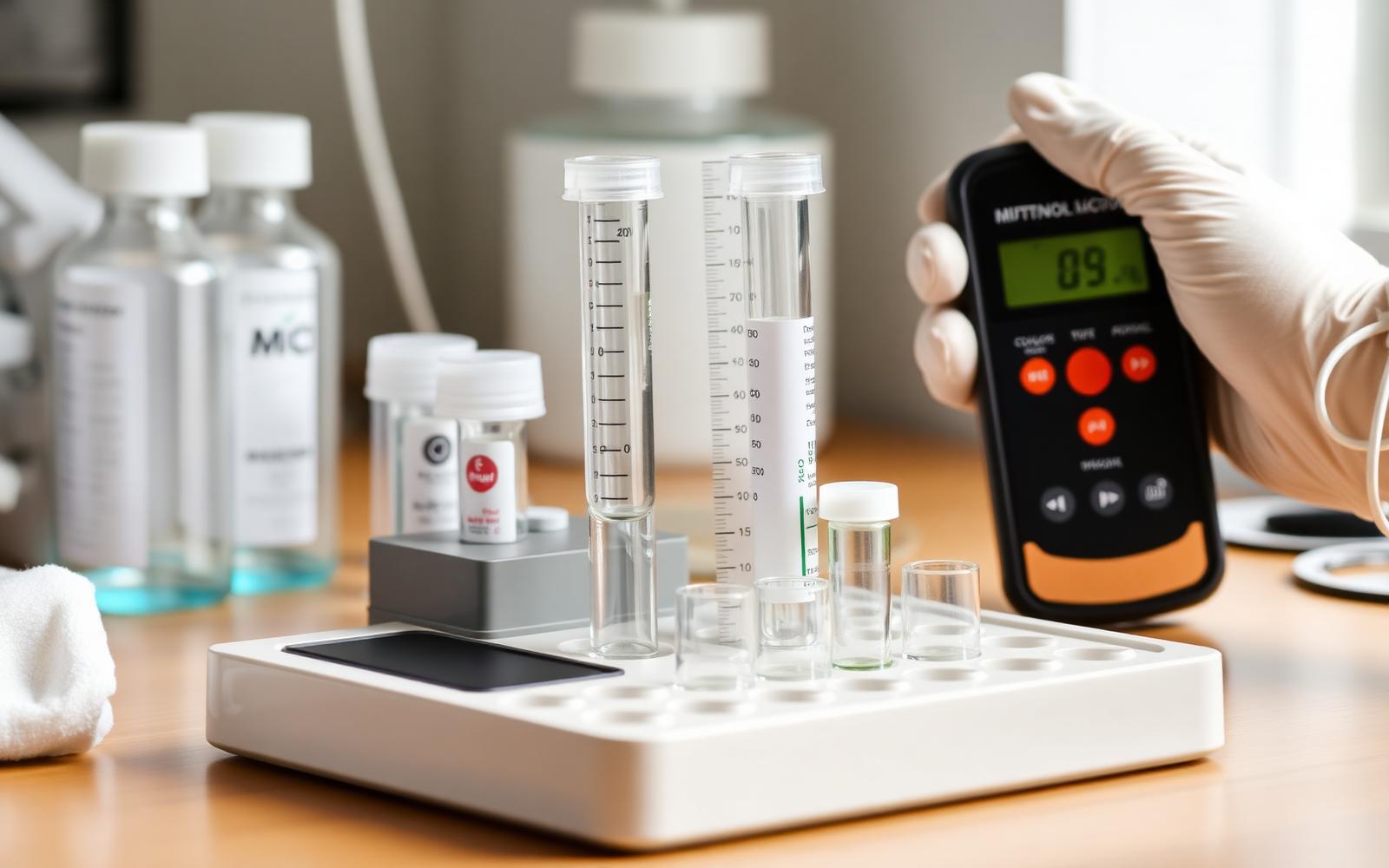
The minimum useful set is CO₂ (ventilation effectiveness), PM2.5 (particulate exposure), TVOC (material and operational sources), temperature and relative humidity (thermal comfort). For full-scope testing add PM10, PM1, NO₂ (urban locations), formaldehyde and speciated VOCs (post-refurbishment). CO and radon are not typically relevant to offices unless geology or adjacent uses suggest otherwise.
Where to place the sensors
Place sensors at desk and breathing-zone height (1.0–1.5 m), at least 1 m from supply diffusers and external glazing, in a representative sample of zones: open-plan workspace (one per 80–120 m²), every enclosed meeting room, breakout areas, and any zone with reported complaints. Always include a control zone with no reported issues so the data has something to compare against.
How long to measure
Continuous monitoring should run for at least two working weeks to capture occupancy variation across hybrid working patterns and weather variation across the period. Four weeks is better. Spot tests have a place — VOC sorbent-tube sampling, post-refurbishment formaldehyde — but should never be the only data source.
What to benchmark against
Benchmark indoor measurements against BS EN 16798-1 Category I/II (UK office default), WHO 2021 Air Quality Guidelines (PM2.5, PM10, NO₂), WELL Building Standard v2 Air concept (formaldehyde, TVOC, particulates), CIBSE TM40 (UK office IAQ), and HSE EH40 (workplace exposure limits) where any are relevant. Plain-English benchmarks: CO₂ < 1000 ppm, PM2.5 < 10 µg/m³, TVOC < 300 µg/m³, RH 40–60%, temperature 21–25°C.
Frequently asked questions
Can I use consumer-grade IAQ sensors to test our office?
Consumer sensors are useful for ongoing visibility but should not be relied on for compliance or investigation reporting — accuracy and calibration vary widely. Use reference-grade sensors for formal testing and consumer sensors for continuous low-cost trending in between.
Do I need to test every meeting room?
Every enclosed meeting room used regularly, yes. They are the highest-CO₂ zones and the most common source of complaints.
Does office air quality testing need to be repeated?
Baseline first, then re-measure annually or after any change (refurbishment, change of use, ventilation works). Continuous monitoring removes the need for repeat formal surveys.