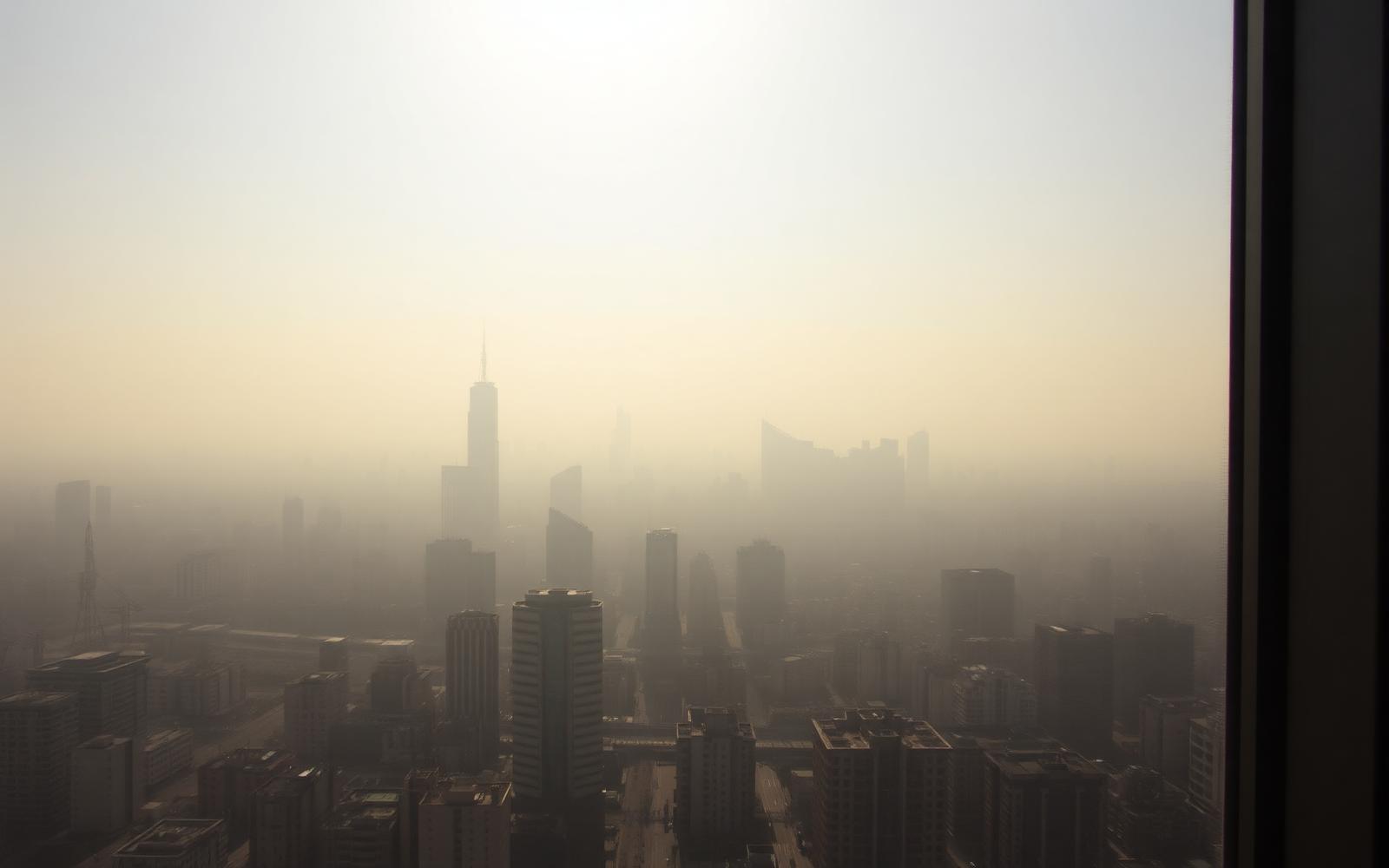
Why office particulate monitoring matters
The 2021 WHO Global Air Quality Guidelines tightened PM2.5 targets to 5 µg/m³ annual mean — half the previous level. For urban UK offices on busy roads, achieving that target indoors is now a real engineering question rather than an automatic outcome. Where outdoor PM2.5 sits at 12–18 µg/m³, indoor concentrations follow unless the AHU filtration is performing.
PM2.5 and smaller particles penetrate deep into the lungs and into the bloodstream. The links to cardiovascular disease, stroke and cognitive decline are robust. For office occupants spending 50 hours a week in the same air, indoor PM2.5 is one of the largest controllable environmental health risks they face.
How we measure office particulates
We use laser-scattering optical particle counters (OPCs) with size-resolved output for PM1, PM2.5 and PM10. Sensors are co-located with a reference-grade instrument for calibration verification at the start of each deployment. Indoor monitoring is paired with an outdoor reference at the building's fresh air intake so the indoor-to-outdoor ratio (I/O) — the cleanest single measure of filtration effectiveness — can be calculated.
Filter audit and improvement
If indoor PM2.5 closely tracks outdoor PM2.5, the AHU filtration is the issue. We audit installed filters against the ISO 16890 classification system, check pressure drops and bypass, and recommend the appropriate ePM1 grade (typically ePM1 50% or ePM1 70% for urban offices). Where the AHU cannot accommodate higher-grade filters, in-room HEPA units are a proven targeted fix for high-traffic spaces.
Reporting and benchmarks
Reports show measured PM1, PM2.5 and PM10 against WHO 2021 Air Quality Guideline targets, WELL Air thresholds and the indoor-to-outdoor ratio. Where filtration is the bottleneck, we provide indicative costs for filter upgrades, AHU modifications and supplementary HEPA units.
Frequently asked questions
Should I monitor PM2.5 or PM10?
Monitor both. PM2.5 is the better health proxy; PM10 captures larger sources (resuspended dust from carpets, outdoor coarse particles). Modern optical sensors return both from a single instrument.
What PM2.5 level is acceptable in an office?
WHO 2021 guidelines: 5 µg/m³ annual mean, 15 µg/m³ 24-hour. WELL Air: 15 µg/m³. Most urban UK offices achieve 8–15 µg/m³ indoors with ePM1 50% filtration.
Do air purifiers help with office particulates?
Yes, especially in spaces where the AHU cannot deliver higher filtration grades quickly. HEPA units are most effective in small to medium meeting rooms; size them by CADR against room volume.