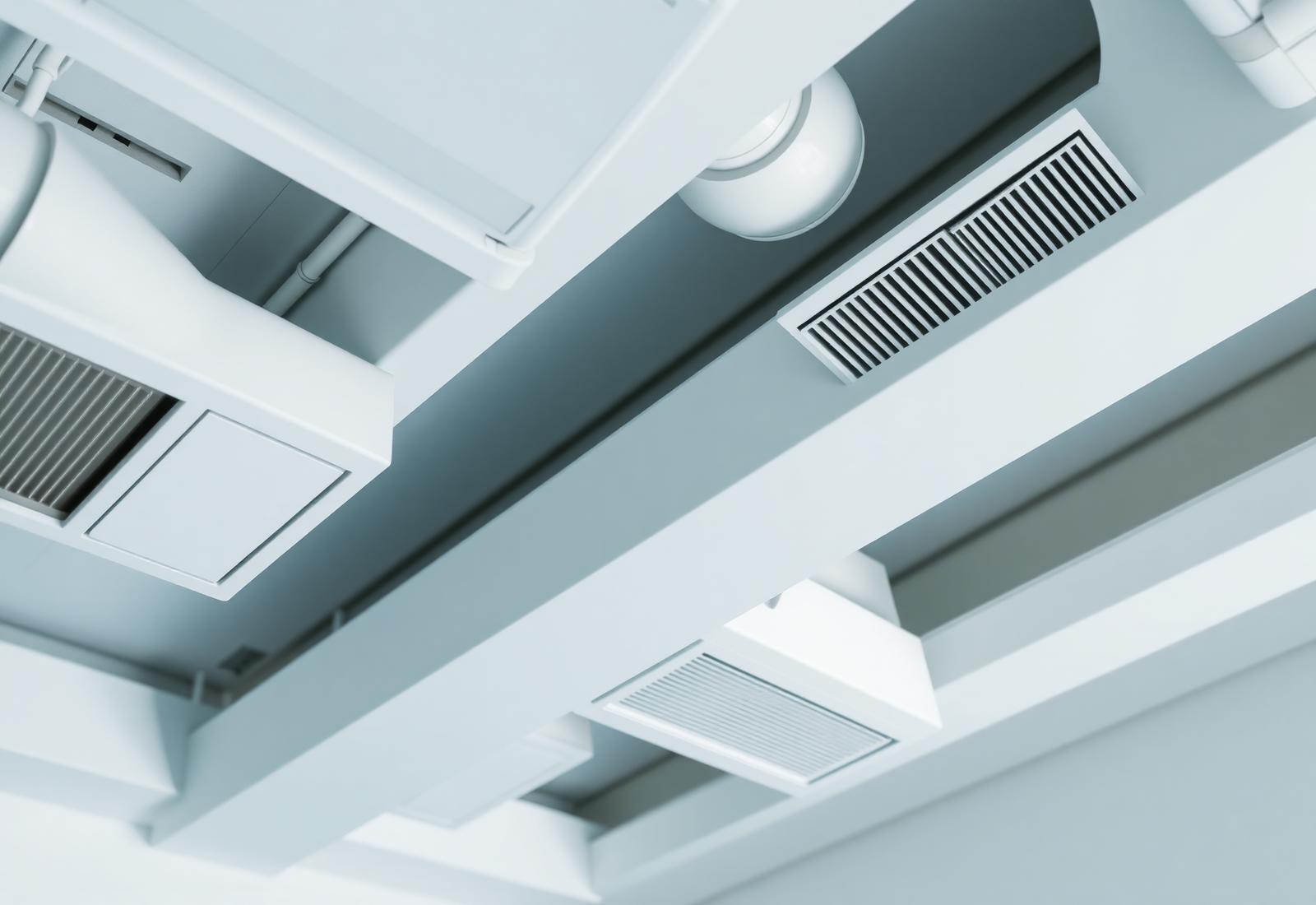
Office ventilation system types we work with
Modern UK offices typically use one of three ventilation strategies: mechanical supply and extract with heat recovery (MVHR), variable air volume (VAV) systems serving open-plan floors, or mixed-mode arrangements that combine mechanical ventilation with limited openable windows. A growing minority use demand-controlled ventilation (DCV) linked to CO₂ sensors in the breathing zone.
Each strategy has predictable failure modes. MVHR fails when filters clog or heat exchangers go uncleaned. VAV fails when terminal boxes drift out of calibration or branch dampers seize shut. Mixed-mode fails when occupants close the windows for noise or thermal comfort and the mechanical fallback is undersized. Our office ventilation review starts with identifying the strategy, then tests whether it is meeting its design intent.
What a ventilation performance review covers
We measure supply and extract airflows at terminals using calibrated vane or hot-wire anemometers, compare against design intent and current occupancy, and check fresh air fractions at AHU level. CO₂ logging across the workspace tells us whether the system is keeping pace with actual demand. Filter condition, damper position, pressure differentials and control settings are inspected and recorded.
The output is a clear picture of where your office ventilation system is performing, where it is under-delivering and where it is wasting energy. Findings are mapped against BS EN 16798-1 Category II (the typical UK office target of 10 L/s per person) and CIBSE TM40 guidance.
Improving office ventilation performance
Many performance gaps close without capital expenditure. Re-commissioning VAV terminals, rebalancing supply against extract, cleaning fouled heat-recovery cores and replacing time-expired filters can recover 20–40% of design ventilation in a poorly maintained system. Where the issue is genuinely capacity, we provide the data to support a business case for AHU upgrade, additional fresh air handling or a move to demand-controlled ventilation.
For hybrid-occupancy offices, DCV almost always pays back inside three years on energy savings alone — before counting the productivity and absenteeism gains from consistently better indoor air.
Design advice for new fit-outs
For new fit-outs and refurbishments, we provide independent ventilation strategy advice during the design stage — fresh air rates per zone, controls philosophy, terminal selection and the monitoring approach needed to demonstrate compliance after handover. Working alongside your M&E designer, we make sure the office ventilation system delivers its design intent on day one and that you can prove it does.
Frequently asked questions
What ventilation rate should an office target?
BS EN 16798-1 Category II — the typical UK office benchmark — requires 10 litres per second of outdoor air per occupant, with Category I (high-quality offices) requiring 14 L/s/p. CIBSE Guide A is broadly aligned.
Can you assess our existing system without disruption?
Yes. Performance reviews use non-invasive measurement at supply and extract terminals plus AHU plantroom inspection during a single working visit.
What is demand-controlled ventilation (DCV)?
DCV adjusts fresh air supply in real time based on CO₂ readings in the breathing zone. It maintains good indoor air on full-occupancy days and saves energy on quiet ones — well suited to hybrid working.