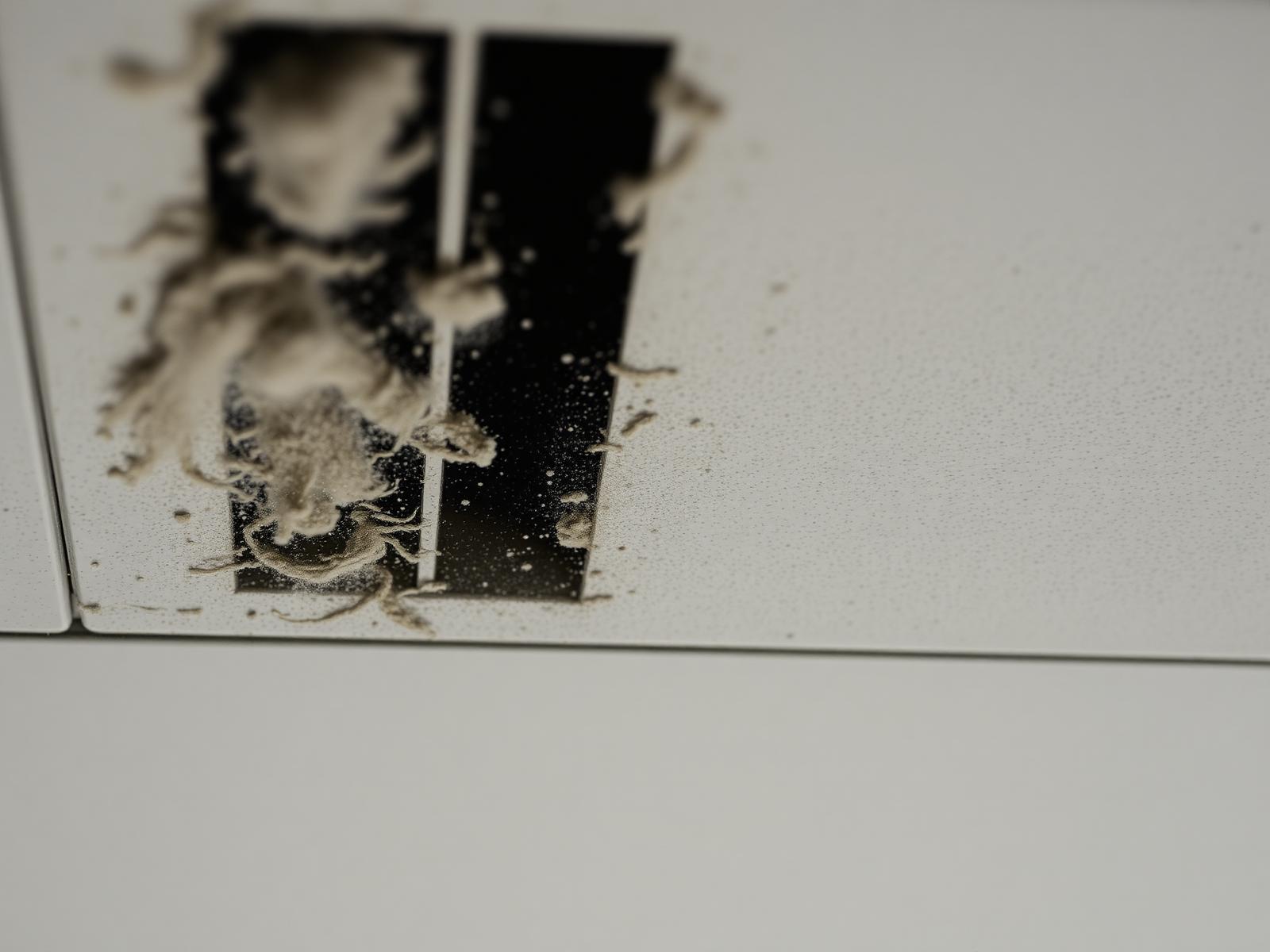
Types of office odour complaints
Office smells fall into recognisable categories: musty / earthy (microbial growth in HVAC condensate, cooling coils or wall cavities); chemical / solvent (new materials, cleaning products, infiltration from adjacent uses); sewer / drain (compromised traps, defective extract); food / kitchen (cross-contamination via shared ductwork or open returns); and exhaust / combustion (intake contamination from car-park or street-level sources). Each has a distinctive investigation path.
Our office odour investigation method
The investigation starts with a structured interview — when does the smell appear, where is it strongest, what makes it better or worse. Continuous TVOC monitoring across the affected zone and the suspected source establishes whether there is a measurable peak co-located with the complaints. Where the smell suggests microbial origin, we sample surfaces, cooling coil condensate and humidifier water; where chemical, we take sorbent-tube samples for laboratory speciation.
Tracing the source
Source tracing combines pressure mapping (which zones are positive, which negative, where infiltration paths run), HVAC inspection, and progressive isolation — closing dampers, sealing returns, monitoring the response. The combination almost always closes on a specific, removable source within one to two weeks.
Remediation and verification
Remediation is source-specific — coil clean and biocide, humidifier overhaul, intake relocation, material removal, drainage repair. The investigation closes with follow-up monitoring and an occupant check-back to confirm the smell has stayed resolved.
Frequently asked questions
Why does my office smell musty?
The most common cause is microbial growth in HVAC components — fouled cooling coils, humidifier reservoirs, condensate trays. Less commonly, damp in wall cavities or under flooring. A structured investigation identifies which.
Can air fresheners mask the problem?
They can — and they often do, postponing investigation while the source grows. We recommend identifying and removing the source rather than masking it.
How long does an office odour investigation take?
Most office odour investigations close within two to four weeks, including any laboratory analysis. Persistent or intermittent odours linked to specific operating conditions can take longer to characterise.